Hooked: TL;DR
A clean, sharp TL;DR of Hooked by Nir Eyal. The Hook Model explains how products like Instagram, WhatsApp, and TikTok turn casual users into daily users through a 4-step loop.
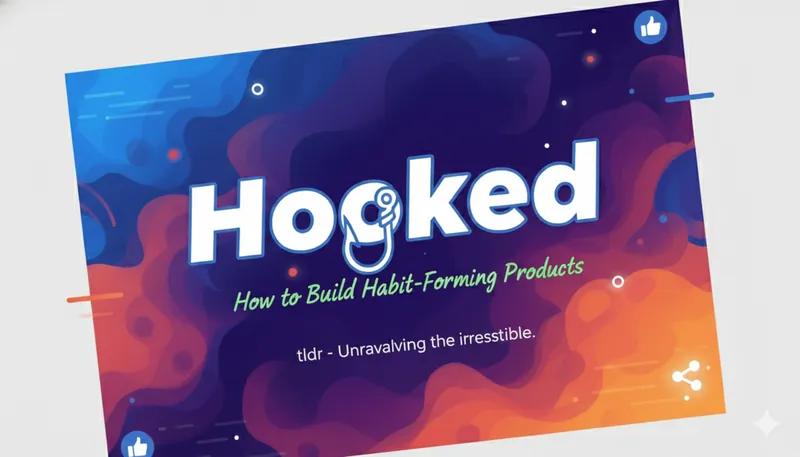
TL;DR: Hooked: How to Build Habit-Forming Products
Nir Eyal's Hook Model explains how products like Instagram, WhatsApp, and TikTok turn casual users into daily users.
It's a 4-step loop:
1) Trigger → Spark the Action
Two types:
-
External: ads, notifications, emails, friend invites.
-
Internal: emotions like boredom, loneliness, procrastination, curiosity.
Great products connect to an internal trigger, so users come back without a nudge.
2) Action → The Simplest Possible Behavior
Users act when they have:
-
Motivation
-
Ability (easy enough)
-
Trigger
Examples of tiny actions:
-
Scroll
-
Tap
-
Swipe down to refresh
Make the action effortless = repeated behavior.
3) Variable Reward → The Dopamine Hit
The reward must be unpredictable.
Three types:
-
Tribe (social rewards: likes, comments, messages)
-
Hunt (information or resources: scrolling feed, TikTok swipe, loot boxes)
-
Self (achievement: leveling up, streaks, progress bars)
Uncertainty = habit fuel.
4) Investment → User Puts Something In
When users contribute:
-
Time
-
Data
-
Followers
-
Playlists
-
Custom settings
-
Content
…they become more likely to return.
This step also loads the next trigger, creating a loop.
Think:
"I've built my playlist here."
"My streak is here."
"My friends are here."
Core Idea
Habits are formed when you repeatedly solve a user's internal trigger with a simple action and a variable reward, and then get the user to invest a little.
Why It Matters
This loop:
-
Increases retention
-
Reduces marketing cost
-
Creates compounding engagement
-
Makes switching away painful
One-Line Takeaway
If your product solves a recurring pain with an easy action and unpredictable reward, and gets users to invest, you've built a habit.
Related reading
 The Complete Guide to UI/UX Onboarding: Research-Backed Best PracticesJan 2026
A deep, structured, research-anchored dive into UI/UX onboarding that synthesizes current best practices, psychology insights, expert research, and real product examples.
Engineering The Power of 1%: Habits for an Entrepreneur-EngineerJun 2025
Small daily, weekly, and monthly actions that compound into massive growth—tailored for founders and engineers.
Work Patience, Persistence, ConsistencyMar 2026
Most people chase intensity. The real game is quieter.
Think